

By nearly any meaningfully metric, the flood is coming—harder, faster, and more often. According to the UN, “The number of people exposed to floods globally has also steadily risen from 28.1 million in 1970 to 35.1 million in 2020—an increase of 24.9%.” The National Oceanic and Atmospheric Association at the US Department of Commerce that high-tide flooding is astoundingly 900% more frequent than it was 50 years ago along the American coastline. Flood risk modeler Fathom projects a further 7-15% increase in flood incidents by 2050, with potential for a 109% increase by 2100.
The severe flood risk is verifiably linked to our warming planet. Climate change is causing heavier precipitation, more frequent hurricanes, and rising sea levels, all of which exacerbate the frequency and intensity of floodingn turn create catastrophic damage and cascading problems: trillions in property damage, rampant food insecurity, disease.

So why aren’t we doing anything about it? And what can we do differently?
PPP author Dominic Boyer tackles this question in a new article for The Conversation with his colleagues at Rice University’s Center for Coastal Futures and Adaptive Resilience, James R. Elliott and Yilei Yu. Together, they reflect on the devastating weather event known as the Tax Day Flood that struck Houston a decade ago. At the time, the flood was considered a statistical anomaly. Then Hurricane Harvey hit the city just as hard the following year, and the storms have kept on coming.
Boyer and his colleagues argue that cities in the United States have largely failed to adapt to extreme weather due to an over-reliance on probability: “‘Off the charts’ events like the Tax Day flood are effectively ignored in official planning. Authorities often prefer to view them as unrealistic until more data is collected – a process that can take decades.”
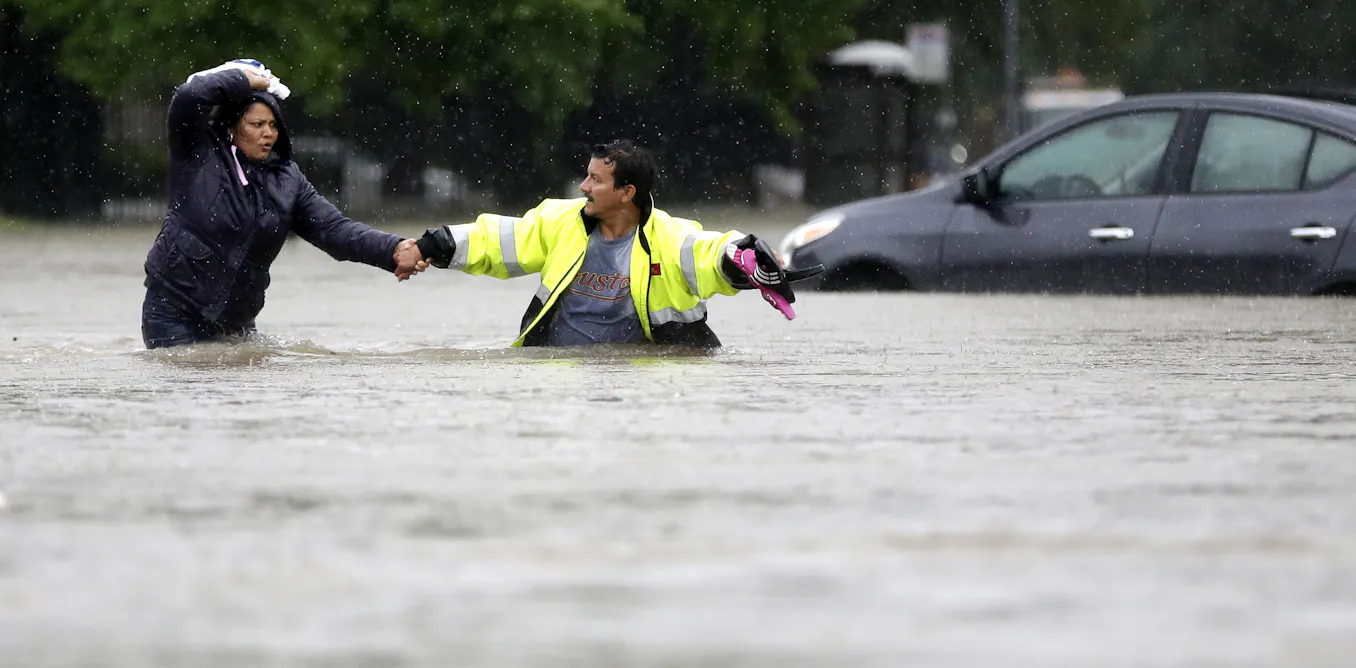
Instead, planners and politicians should learn from the Dutch, who consider possibilities over probabilities. By planning for worst-case scenarios instead of likely outcomes, cities can be more resilient and responsive when faced with natural disasters.
To encourage this kind of thinking, the Center for Coastal Futures and Adaptive Resilience has developed an mapping tool that models potential flood impact on Houston. Learn more about their work here.

Houston Tax Day Flood Revisited, Center for Coastal Futures and Adaptive Resilience
Dominic Boyer is an anthropologist, media maker, and founding thinker in the field of Energy Humanities. He became the founding director of the Center for Coastal Futures and Adaptive Resilience at Rice back in 2013. But years before he joined the Rice University faculty, he wrote his second book, Understanding Media: A Popular Philosophy for Prickly Paradigm. The book is an entertaining but serious exploration how media shapes how we think and act.
